


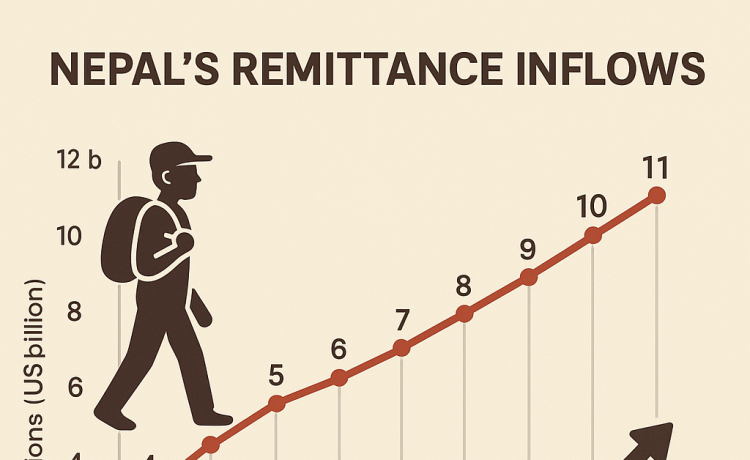

Nepal’s economy significantly depends on remittances sent by overseas workers, prompting discussions on mitigating risks associated with a remittance-driven economic model.
Nepal has long relied heavily on the inflow of remittances from its large population of migrant workers abroad. These remittances have become a crucial source of foreign exchange and contribute substantially to the country’s GDP. However, stakeholders and analysts have raised concerns about the vulnerabilities and drawbacks of an economy overly dependent on remittances. Challenges include exposure to global economic fluctuations, labor market instability abroad, and limited domestic economic diversification.
Experts suggest that reducing this dependence requires comprehensive policy reforms aimed at boosting local economic sectors, improving employment opportunities within Nepal, and enhancing skills development for workers. Such strategies would help to create a more balanced and sustainable economic structure, less susceptible to external shocks.
This discourse is particularly relevant for countries like Greece, which host many Nepalese overseas workers, highlighting the importance of bilateral cooperation on labor issues, worker protections, and economic development initiatives that benefit both sending and receiving nations.
Sources referenced:
- https://news.google.com/rss/articles/CBMie0FVX3lxTFBQZHh0WXI5VUdDOFhpMVBJYWJjWmFmdkdmQXYwbHJyQ3ZDdXdxNURhcjNYcEtKUTFVb3I1eXk3Z2UyWTRoZVBsQ0Yyd3lDRkFnTFIzNHhKcUJXNFdRTkN0UWNVUEVwaVBXS29HUkdmNGhKTTFSaEZkX2RJTQ