


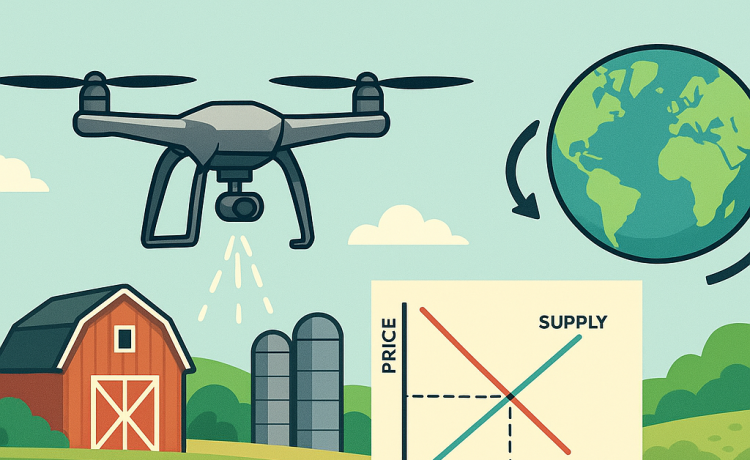

Agricultural economics is a dynamic and essential field that manages the production, distribution, and consumption of food and fiber, playing a crucial role in addressing global food security, poverty, and sustainability challenges amid a growing population.
Agricultural economics is more than a mere academic discipline; it is a fundamental pillar underpinning human civilization. This field studies the allocation, utilization, and management of agricultural resources involved in producing, distributing, and consuming food and fiber products. As global population projections estimate nearly 9.7 billion people by 2050, efficient and sustainable agricultural practices become imperative to meet rising food demands.
At its core, agricultural economics involves understanding market dynamics through supply and demand, where supply depends on factors like weather, technology, and government policies, while demand is influenced by population growth, income levels, and consumer preferences.
Technological advancements, such as precision agriculture employing drones, satellite imagery, and machine learning, have revolutionized productivity and efficiency, enabling farmers to optimize outputs and reduce waste.
Globalization and international agricultural trade further shape the sector, with countries specializing according to comparative advantages and influenced by trade policies including tariffs, quotas, and subsidies.
In sum, agricultural economics is essential for promoting sustainable agricultural development, ensuring food security, and reducing poverty worldwide. Its insights are critical for policymakers, researchers, and practitioners working to secure humanity’s food future.
Sources referenced:
- https://www.manilatimes.net





1 Comment