


A summary of key economic and environmental updates in Nepal over the past week.
In the past week, Nepal has faced significant challenges and developments across various sectors. The country’s banks are currently experiencing a cash surplus due to a notable decline in loan demand, indicating potential economic stagnation. Concurrently, the price of gold has dropped sharply, falling below Rs 300,000 per tola, reflecting fluctuations in the market.
Environmental concerns have been highlighted by Prime Minister’s remarks attributing the recent Bhotekoshi disaster to climate change, urging for global action to address these pressing issues. Additionally, Nepal saw a slight decrease in international tourist arrivals in August 2026, which may impact the tourism sector’s recovery.
The country is also grappling with the aftermath of severe flooding, which has led to the closure of the Zhangmu Port, affecting trade with China at the Tatopani border. Rescue operations are ongoing following devastating floods and mudslides in Nuwakot District, with nearly 160,000 women and girls reported to be impacted, as noted by UN Women. The Nepal Army is engaged in rescue efforts for workers trapped in the Upper Trishuli Hydropower Tunnel.
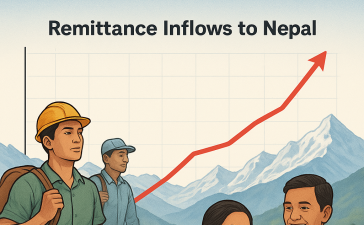
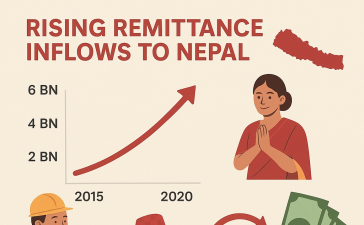
On the economic front, Nepal is facing a paradox of high foreign reserves amidst sluggish growth, with projections indicating a 3.85% growth fueled by Rs 2.36 trillion in remittances for the fiscal year 2025/26. The country is at a critical juncture as it considers transitioning from a hydropower-dependent economy to a more resilient renewable energy framework.
Overall, these developments underscore the complex interplay of economic and environmental factors affecting Nepal, particularly in the context of its overseas workforce and broader economic landscape.
Articles covered:
- Nepalese Banks Experience Cash Surplus Amid Lack of Loan Demand
- Gold Price Drops Sharply, Slips Below Rs 300,000 per Tola in Nepal
- Nepal PM Attributes Bhotekoshi Disaster to Climate Change, Calls for Global Action
- Nepal Experiences Slight Decline in International Tourist Arrivals in August 2026
- Nepal Faces Critical Crossroads: Transitioning from Hydropower to a Resilient Renewable-Energy Economy
- Flood Concerns Close Zhangmu Port, Impacting Nepal-China Trade at Tatopani Border
- Search inside Rasuwagadhi Hydropower Project tunnel finds no survivors after flood
- Weekly Summary: Nepal’s Recent Developments
- Weekly Summary: Nepal
- Weekly Summary: Nepal’s Recent Developments
- Nepal’s Glacier Collapse Highlights Regional Himalayan Risks from Climate Change and Upstream Activity
- India and China Deploy Specialist Teams to Support Nepal Flood Rescue Operations
- Very Heavy Rain Forecast in Karnali and Sudurpashchim Hills of Nepal
- Devastating Floods and Mudslides Ravage Nepal’s Nuwakot District: Rescue and Relief Underway
- Nepal Army Engineers Prepare Blasting Operations to Rescue Workers Trapped in Upper Trishuli Hydropower Tunnel
- Nearly 160,000 Women and Girls Impacted by Nepal Floods, UN Women Reports
- Weekly Summary: Economic Developments in Nepal
- Weekly Summary: Economic Developments in Nepal
- Weekly Summary: Economic Developments in Nepal
- Weekly Summary: Economic Developments in Nepal
- Weekly Summary: Economic Developments in Nepal
- Nepal Faces Economic Paradox: High Foreign Reserves Amidst Sluggish Growth
- Nepal’s Economy Projects 3.85% Growth Fueled by Rs 2.36 Trillion in Remittances in FY 2025/26