



Scientists explore the formation, structure, and unique properties of diamonds, advancing their uses in technology, medicine, and quantum computing.
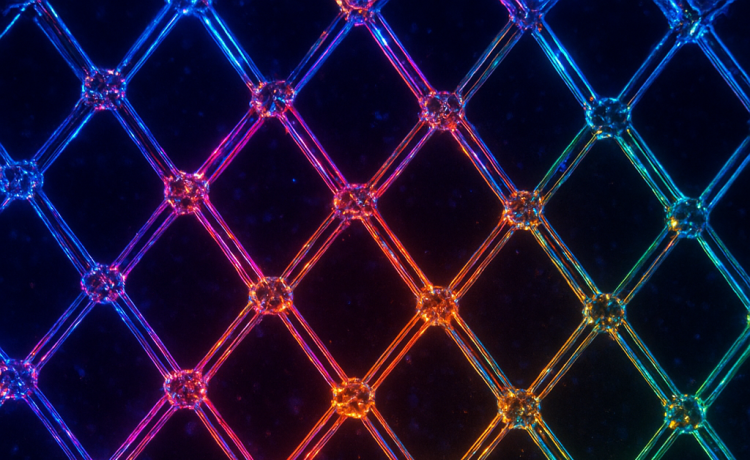
Diamonds, long revered both as precious gemstones and scientific curiosities, have fascinated researchers exploring their complex formation deep within the Earth’s mantle. Created through a high-pressure high-temperature (HPHT) process that transforms carbon atoms into a rigid crystal lattice, diamonds exhibit extraordinary hardness, thermal conductivity, and distinct optical features. Their lattice structure, describable by group theory as a face-centered cubic arrangement of carbon atoms, underpins these physical properties and enables diverse industrial applications.
Recent advances in diamond research have uncovered how impurities introduce color variations and how their exceptional electronic properties, such as high carrier mobility, are harnessed to develop next-generation technologies. Notably, diamonds show promise in high-power electronic devices including radiation detectors and quantum computing components, thanks to these superior qualities.
Beyond materials science, diamond nanoparticles are pioneering roles in nanomedicine—serving as drug delivery vehicles and biosensors, and even in cancer therapies. The intersection of diamond research with quantum computing is particularly promising, with diamond-based quantum bits offering scalable avenues to practical quantum machines.
This multidisciplinary pursuit continues to push boundaries in physics, biology, and engineering, boosting prospects in optoelectronics and device radiation hardening. As fabrication techniques evolve, particularly HPHT synthesis and nanotechnology, future discoveries are poised to deepen understanding and broaden applications of these remarkable stones.
Sources referenced:
- https://www.manilatimes.net