


Scientists delve into the complex mechanisms of fouling, a process where unwanted substances accumulate on surfaces, aiming to develop more efficient and sustainable technologies through interdisciplinary research and mathematical modeling.
Fouling, the accumulation of unwanted materials on surfaces, affects many industries and natural environments, from marine vessels to medical devices. Recent research has focused on understanding the underlying physical, chemical, and biological interactions driving fouling to help mitigate its adverse effects.
Physical forces such as van der Waals, electrostatic, and hydrophobic interactions govern the initial attachment of foulants, with surface properties like roughness and charge playing critical roles. Chemical bonding, including covalent, hydrogen, and ionic bonds, further stabilizes foulant adhesion, influenced by environmental factors like temperature and pH.
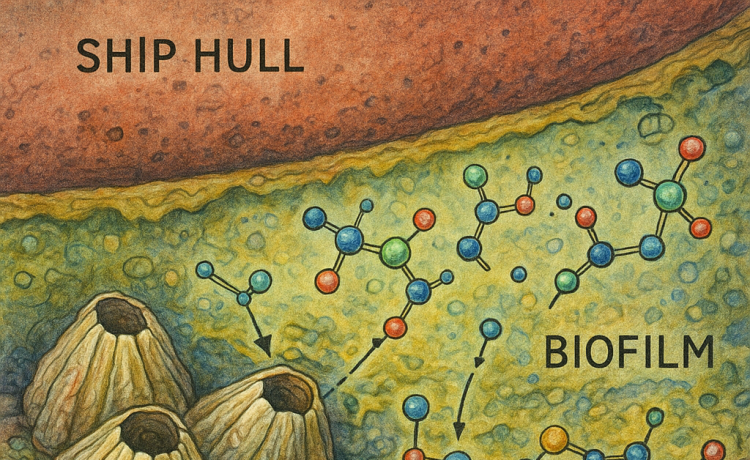
Biological fouling involves microorganisms producing extracellular polymeric substances that form protective biofilms, complicating removal and control. Recognizing the microbial role is essential for effective anti-fouling strategies.
Researchers use mathematical modeling to describe and predict fouling dynamics. For example, differential equations incorporate mass transport, surface coverage, and reaction rates to simulate foulant accumulation over time, informing the design of improved prevention and cleaning methods.
This multidisciplinary approach combining surface chemistry, microbiology, and engineering paves the way for technological advancements in sectors such as maritime transport, healthcare, and environmental protection. Enhanced understanding of fouling mechanisms may lead to more sustainable materials and coatings, reducing energy consumption and maintenance costs while improving safety and efficiency.
Sources referenced:
- https://www.manilatimes.net/cdn-cgi/content?id=WnNgKpe28vYjzyFAo09mVwrvd__73FQLZ7PgUxe6hUQ-1794338464.8950877-1.2.1.1-Ry3hunfzRPuv42NQoTw.JFXudEu52mwByMteqjNnyQRNKmRDmulGtoE861IhZwAz