


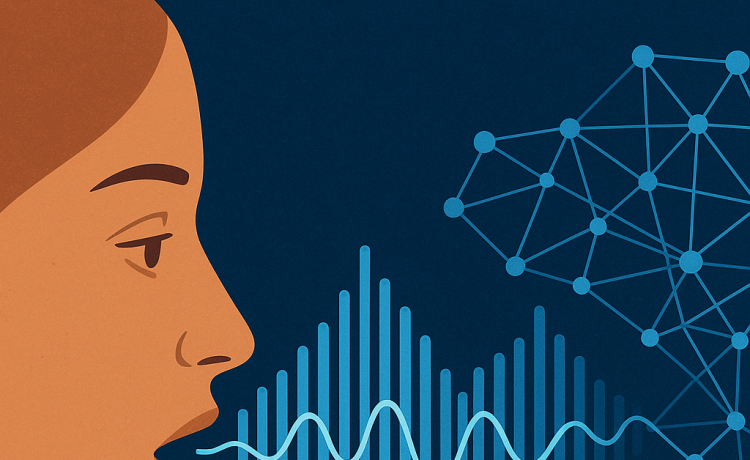

Speech recognition technology has evolved significantly, employing machine learning and deep learning techniques to convert speech into text with increasing accuracy, yet challenges remain with background noise and diverse languages.
Speech recognition technology, which converts spoken language into text, has made remarkable strides in recent years, leveraging advanced machine learning and deep learning methodologies. Systems capture audio signals via microphones and analyze features such as pitch, tone, and rhythm. The implementation of recurrent neural networks (RNNs) enables processing of sequential data to understand the evolving characteristics of speech during conversations. Acoustic modeling further refines the mapping between audio signals and phonemes, the basic sound units in language. Despite achieving accuracy rates exceeding 95%, comparable to human performance, challenges persist, particularly in dealing with background noise and handling complex languages or dialects. Ongoing research aims to address these obstacles, further enhancing applications ranging from virtual assistants to healthcare and education. The continuing innovation in this field promises to revolutionize human-machine interaction, including potential advancements in recognizing emotional nuances in speech.
Sources referenced:
- https://www.manilatimes.net/cdn-cgi/content?id=EoE.GFrK1yPePBjfO7.HM9I52E77Q9h_YIE8z9ago4I-1795249255.0116143-1.2.1.1-FbDCtD9f_Pbux3lSg0za0p3l9ASHnryqpoxcj0YVkdI0mWNgV4Eljf5tH2cUoVoA