
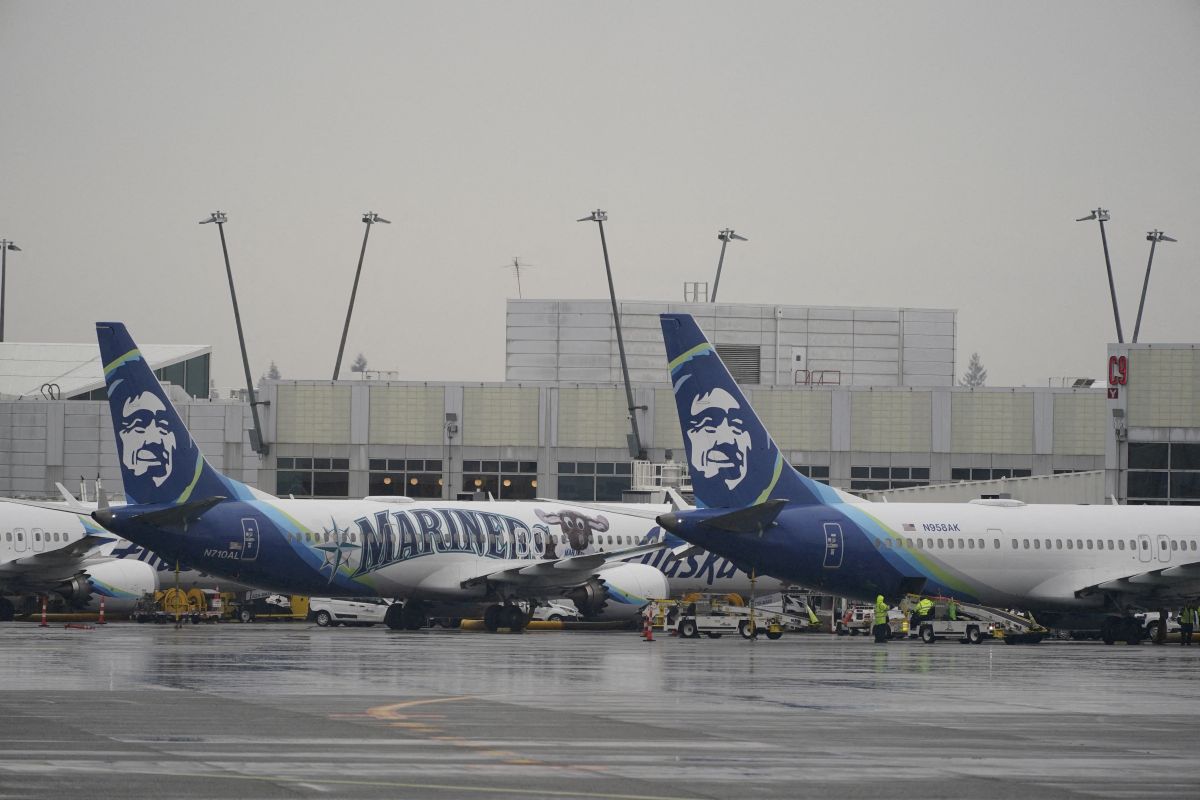
A nationwide disruption to US air travel caused by outdated FAA equipment and router failures resulted in over 10,000 flights canceled or delayed over three days, as authorities work to restore normal operations.
For the third consecutive day, US air travel experienced significant disruptions, with more than 10,000 flights canceled or delayed as of Sunday following a nationwide ground stop initiated by the Federal Aviation Administration (FAA). The disruptions began on Friday and continued into the weekend due to serious air traffic control communications problems triggered by the failure of routers installed during routine maintenance work.
According to data from FlightAware, on Sunday alone, more than 2,300 flights were canceled and approximately 7,700 delayed nationwide. On Saturday, cancellations surpassed 6,400 flights with over 8,000 delays reported. Major airlines were affected to varying degrees, with JetBlue canceling 28% of its flights, American Airlines 17%, and United, Southwest, and Delta Airlines each canceling between 3% to 5%.
Transportation Secretary Sean Duffy, speaking on ABC’s “This Week,” confirmed that the cause was not a cyberattack or malicious activity but related to the malfunction of equipment following the replacement of a router at an FAA facility in El Dorado, Arkansas. This failure led to overloads in routers at several air traffic control centers, hampering communications. The FAA subsequently disabled the problematic routers and about 60 other similar devices to isolate the issue.
The implicated routers were originally purchased in 2001 and have been considered obsolete since 2006, highlighting longstanding challenges faced by the US air traffic control system, including aging technology, equipment reliability, and a shortage of air traffic controllers.
Secretary Duffy urged Congress for increased funding, requesting $50 billion to upgrade air traffic control infrastructure, up from an earlier proposal of $30 billion. This comes despite approximately $11 billion of the $12.5 billion approved in 2025 remaining largely unspent. Congressional Democrats, poised to take control of Congress in the coming session, expressed skepticism over the funding needs, questioning why additional appropriations were necessary given the existing unused funds.
Meanwhile, industry experts call for a combination of government and private investment to modernize the system in preparation for projected increases in global air passenger traffic, which the International Air Transport Association (IATA) estimates will more than double by 2050.
US President Donald Trump publicly supported increased funding for air traffic control system modernization, emphasizing that expenditures should be comprehensive rather than incremental.
The FAA and airline operators continue efforts to restore normal operations with expectations of recovery by Monday. The prolonged disruptions represent the longest nationwide halt to US air travel since the September 11, 2001 terrorist attacks.
This ongoing situation underscores significant vulnerabilities in US aviation infrastructure that affect both domestic and international travelers, including overseas workers relying on US air transport connectivity.
Sources referenced:
- https://www.gmanetwork.com/news/topstories/world/1009630/thousands-of-us-flights-canceled-delayed-for-third-day-in-a-row/story/