
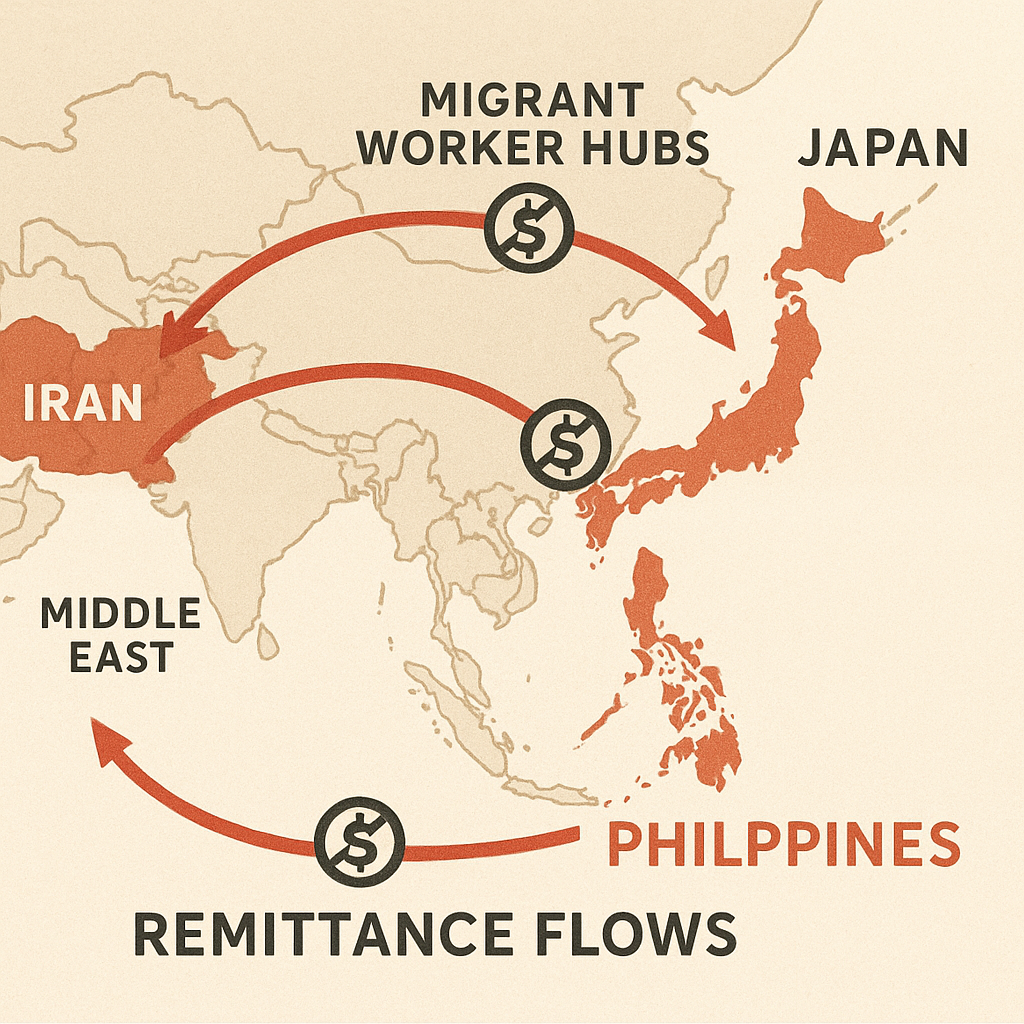
US sanctions on Iran complicate international money transfers, raising concerns for Asian countries reliant on remittances from overseas workers, including the Philippines.
The ongoing US administration’s hardline stance on Iran has created unintended disruptions to financial channels vital for remittances flowing into Asia. Asian nations, including the Philippines, are heavily dependent on remittances sent by their overseas workers, which serve as a crucial lifeline for families and national economies alike. However, the sanctions imposed on Iran have led to increased scrutiny and difficulties for international money transfer operators, potentially jeopardizing the smooth flow of remittances.
Financial institutions and remittance providers are facing significant challenges in processing transactions that may involve Iranian financial institutions or routes affected by the sanctions. This has heightened concerns among policymakers and development experts about the impact on millions of workers and their families, particularly in countries with large expatriate populations in the Middle East and beyond.
The Philippines, which consistently ranks among the top recipients of remittances globally, has voiced apprehensions over these disruptions. Remittances contribute significantly to the country’s GDP and are essential for poverty alleviation and economic stability. Observers warn that any sustained disruption could negatively affect household incomes and economic development in remittance-dependent communities.
Experts urge coordinated international dialogue to minimize unintended consequences of geopolitical policies on migration-linked finance. They highlight the importance of ensuring secure, affordable, and reliable remittance channels to support the livelihoods of overseas workers and their families.
As the geopolitical landscape evolves, the interconnectedness of global finance and migration underscores the need for nuanced policy approaches that safeguard critical remittance flows amidst broader economic sanctions regimes.
Sources referenced:
- https://www.scmp.com/news/asia/economy/article/3052096/how-trumps-war-iran-jeopardising-asias-remittance-lifeline