
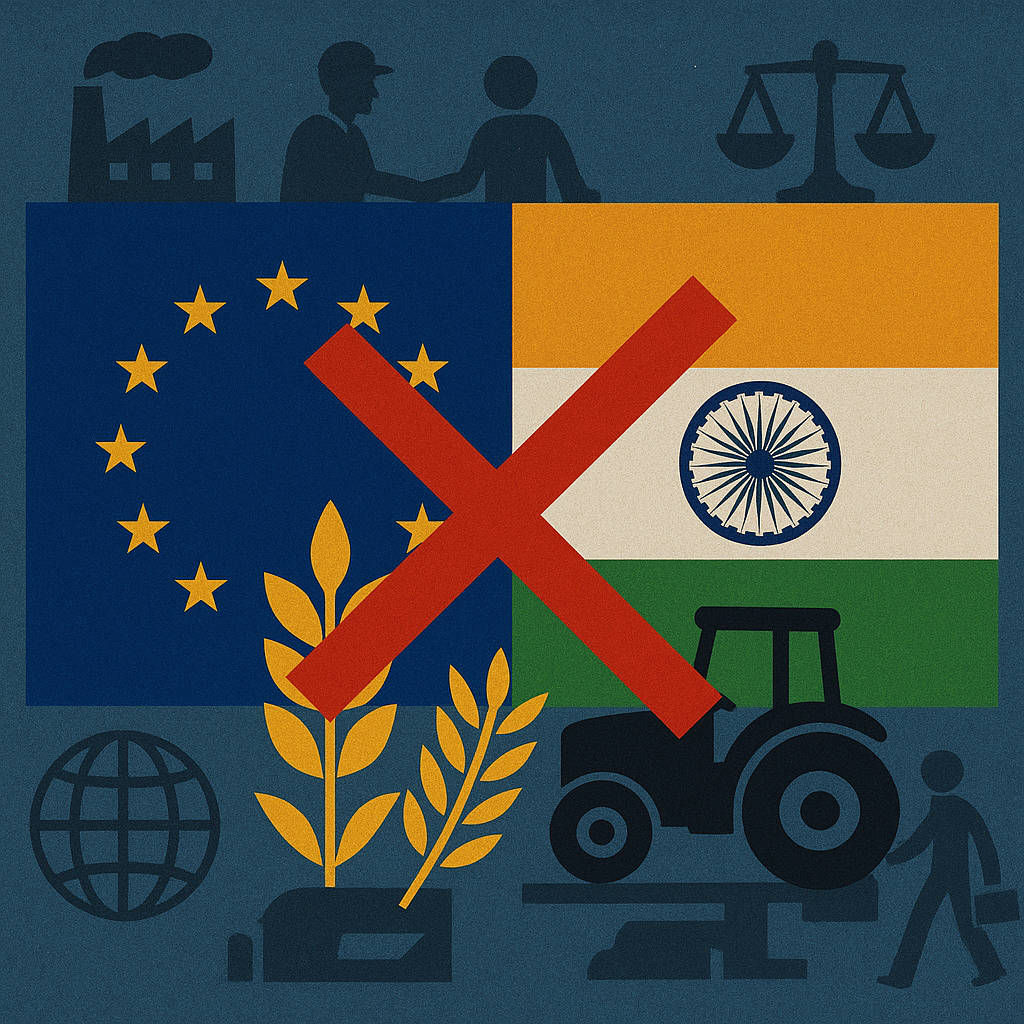
The forthcoming EU-India trade agreement will notably exclude agricultural products, according to statements by Ursula von der Leyen. This development carries implications for labor mobility and overseas workers, including those in Greece.
According to a statement by Ursula von der Leyen, President of the European Commission, the anticipated trade agreement between the European Union and India will not cover the agricultural sector. This decision highlights the ongoing complexity in negotiations impacting various economic sectors. Officials have yet to release detailed information on how this exclusion will affect labor dynamics, especially for Indian workers abroad, including those employed in Greece. The EU-India trade talks have been closely watched due to their potential effects on job markets, labor mobility, and economic development in both regions. As negotiations progress, both Indian and Greek authorities, together with EU institutions, are expected to monitor the outcome keenly to safeguard workers’ rights and business interests. No official announcements have detailed changes yet concerning overseas employment frameworks under this trade deal. The exclusion of agriculture from the agreement may influence sectors differently, but specific impacts remain to be formally clarified.
Sources referenced:
- https://news.google.com/rss/articles/CBMipwFBVV95cUxOVlh2QmFvb2dVTHl3Y1hnMzdoS2NkWXltdlJldkw0cEpqbGNEeFd3RDhmSDg0WHJ4VmNFcWg5YjJPem9NSTNHNms0SnM0R21TSXYtaEhwYXlmU0FybkZxRjBDdXI5aU5YQzFMWHAxZ19JcUlFN0ZqQmxVNnZRWFVYOTBPTS00bXRfMXdReTJUYlkwZURMdXJDbGQ4Qnh1QldOc2R3aXRHQQ?oc=5