
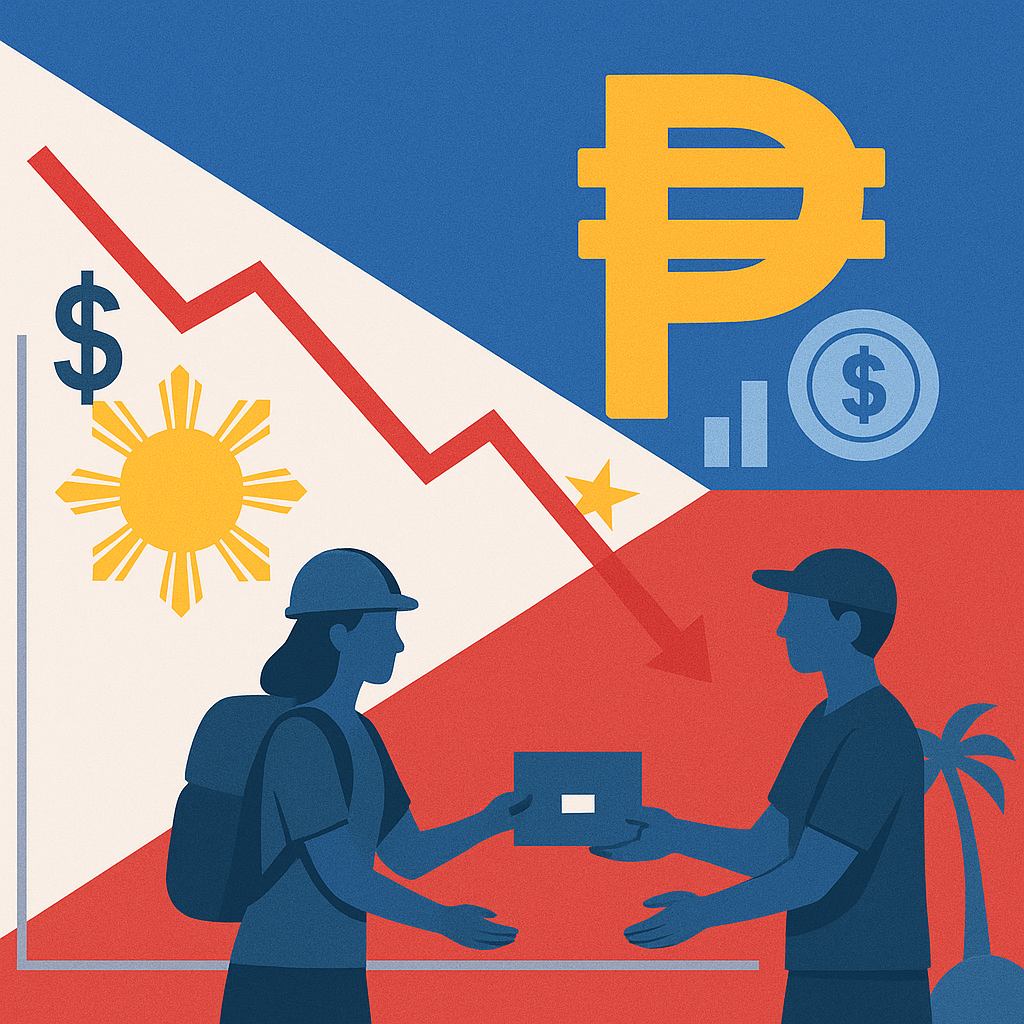
As of September 11, 2026, the Philippine peso trades at ₱62.68 to US$1, marking its lowest point in history, according to the Bankers Association of the Philippines (BAP). This currency depreciation has significant implications for overseas Filipino workers and remittance flows to the Philippines.
The Philippine peso reached a historic low against the US dollar, trading at ₱62.68 to US$1 as of September 11, 2026, according to data released by the Bankers Association of the Philippines (BAP). This significant currency depreciation is closely monitored due to its considerable effects on the country’s economy and, notably, on Overseas Filipino Workers (OFWs) and their families.
The weaker peso means that remittances sent by overseas workers convert into fewer pesos, potentially reducing the purchasing power of recipient families in the Philippines. Given that remittances are a major contributor to the Philippine economy—serving as an important source of household income and foreign exchange reserves—the exchange rate fluctuation poses challenges for economic stability and consumer spending.
Financial analysts emphasize the need for policymakers to support measures stabilizing the currency and to assist OFWs in managing the impact on their remittances. Additionally, the situation highlights the continuing importance of remittance flows for development and poverty alleviation within the country.
The Bankers Association of the Philippines continues to track exchange rates and advises stakeholders, including financial institutions, OFWs, and recipients, to stay informed about currency trends. The government and financial regulators may consider intervention or policy adjustments to address the repercussions on the economy and labor-export sectors.
Sources referenced:
- https://news.google.com/rss/articles/CBMi3gFBVV95cUxPWUhUcjVRRHBmb1JXS1VmUGxQUVdCRGliTV9hQk9FNjNVVnd1U2JFMTllNDRweGY3NThIRWN3MWIwMnZyd2RCZjJLbXB6T01YbUJpeUVKMU1YVDRCWFhZd1VQeTRHb3VDWkJHZWdGZJBdEtUOFBldmdQWXAzbU43aGw5NUQ0WnUwSWdoYm9KcldMOENyeDIyazhYeE5MMDFKX0xjb2FPRU1sdE1UV2VEcTBQY1lheHhZcUx5aEcwYUFKVHFpenVEc0VpVWJUdHZESC1ZdkxPUFRWTXFxbkE?oc=5