
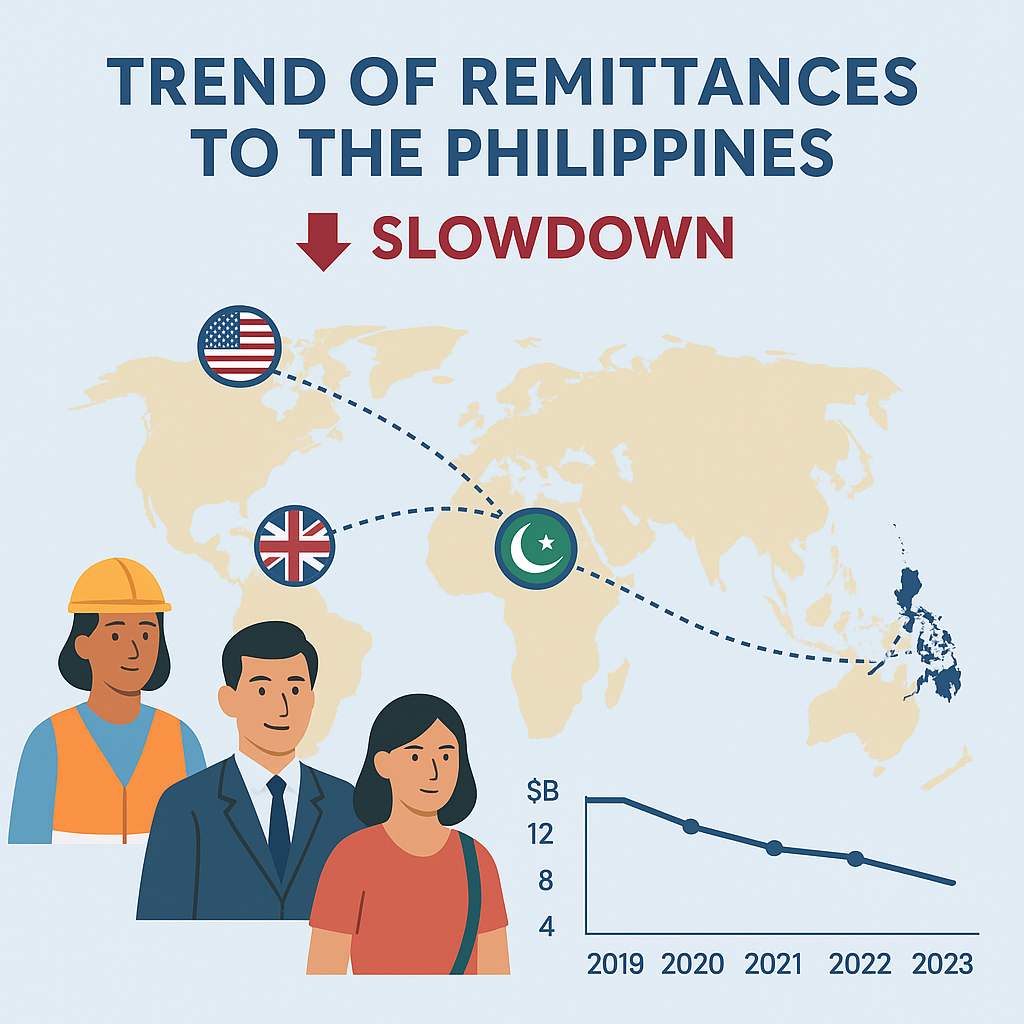
Remittances from overseas Filipino workers (OFWs), a vital source of income for the Philippines, are experiencing a slowdown, raising concerns about its economic effects.
The Philippines is currently experiencing a noticeable slowdown in money remittances sent from overseas Filipino workers (OFWs), a critical source of foreign exchange and economic stability for the country. According to recent reports by Manila Standard, the inflow of remittances, which constitute a significant portion of the country’s GDP and are essential for supporting families and domestic consumption, has slowed down amid various global economic challenges. Experts suggest that factors such as inflationary pressures abroad, tighter immigration policies in key remittance-sending countries, and the global economic slowdown are contributing to the reduced growth rate of these funds.
This slowdown poses concerns for the Philippine economy as remittances contribute not only to household income but also bolster local businesses and housing markets. The government is closely monitoring the situation and is exploring fiscal and social support measures to mitigate potential adverse effects on the economy and the welfare of OFWs and their families.
Stakeholders emphasize the importance of continuing to support OFWs with appropriate policies, including diplomatic initiatives with host countries, financial literacy programs, and strengthening formal remittance channels to ensure secure and efficient money transfers. The Philippine government also urges overseas workers to stay informed about regulations and possible changes in host countries that might affect their employment and remittance capabilities.
Sources referenced:
- https://www.manilastandard.net/business/economy-trends/314468298/philippines-feels-slowing-money-from-abroad.html