
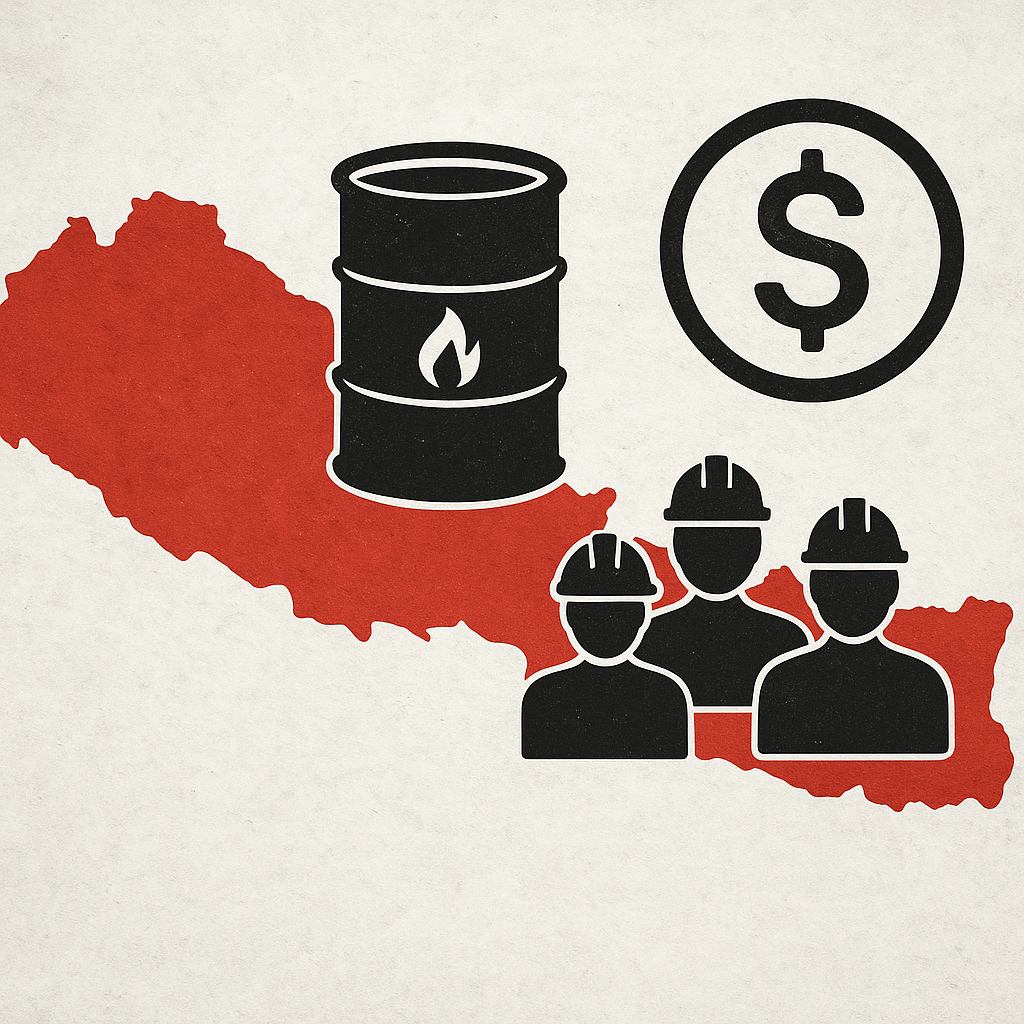
Nepal's economy shows vulnerability due to heavy reliance on imported fossil fuels and remittances from workers abroad, highlighting challenges ahead.
Nepal’s economic resilience is significantly challenged by its heavy dependence on imported fossil fuels and the inflow of remittances from Nepalese working overseas. This economic model, described as a form of ‘borrowed resilience,’ underscores both the country’s fragility and its reliance on external factors. Official data confirm that Nepal imports the majority of its energy needs, making it susceptible to global fuel price fluctuations and supply chain disruptions. In addition, remittances sent by overseas workers represent a critical part of Nepal’s financial system, sustaining many households and supporting national consumption. However, experts warn that this dependence creates economic vulnerabilities, as any disruption in remittance flows or fuel supplies could have profound impacts. The government and economic researchers highlight the need for diversification strategies, including investment in renewable energy and boosting domestic industries, to reduce these weaknesses. These findings are pivotal for policymaking aimed at enhancing Nepal’s long-term economic stability and reducing its exposure to external shocks.
Sources referenced:
- https://news.google.com/rss/articles/CBMitgFBVV95cUxNUnpQdTEzbzVNUV9zbEoxSTRabGFlMndWaDJjVHNBN1pyT3NNSmRWckp2M1VOUExiX1o0VTdjeFZMV0N0V3RiUGU2VGp2V0RNTmZtQWFOaVNZMGZZa1BIbVNFYVg3b2QzRTZLc1EweFNNSlBoblMzWFU2NW1PaDhiTFZ5bWZRa04zS1dXOS11clZPOWRSQm1hYldObmtKSks2c3ZScW95UTdqUnc4NjRVR1MtbWl6UQ