
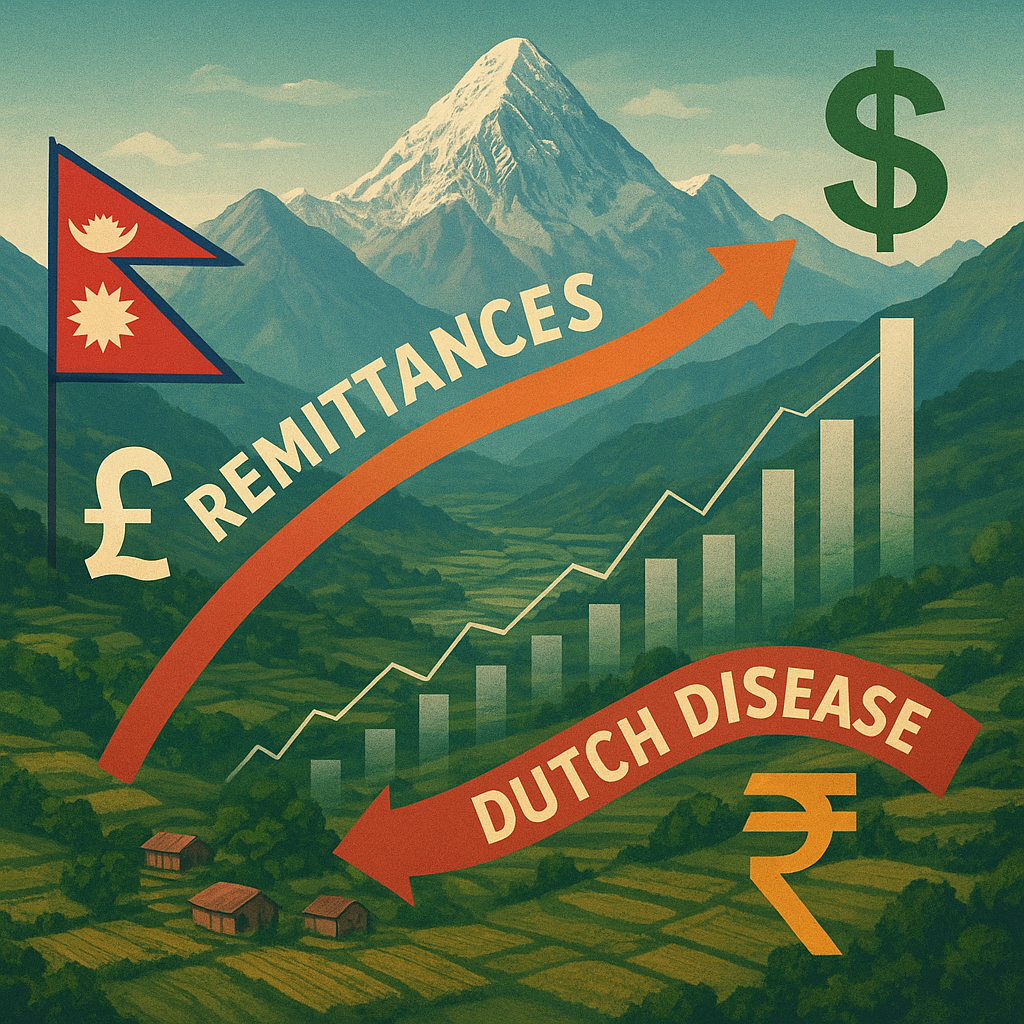
An analysis of how remittance inflows impact Nepal’s economic dynamics through the lens of Dutch disease effects.
Nepal’s economy experiences significant inflows of remittances from citizens working abroad, which play a crucial role in supporting household incomes and national foreign exchange reserves. However, these remittances have also brought economic challenges commonly described as ‘Dutch disease.’ This phenomenon occurs when large remittance inflows cause currency appreciation, making Nepalese exports less competitive globally and potentially hindering the growth of domestic industry.
Experts and economists analyzing the current trends emphasize the need for policies that not only leverage remittance inflows for national development but also protect local industries from adverse effects. Sustainable economic planning, diversification strategies, and investment in productivity-enhancing sectors are considered essential to mitigate the risks associated with Dutch disease.
While remittances provide critical financial support to many Nepali families and the broader economy, balancing this benefit with the need for economic diversification and industrial competitiveness remains a key policy challenge for Nepal going forward.
Sources referenced:
- https://kathmandupost.com/opinion/2024/04/25/dutch-disease-and-nepali-economy