
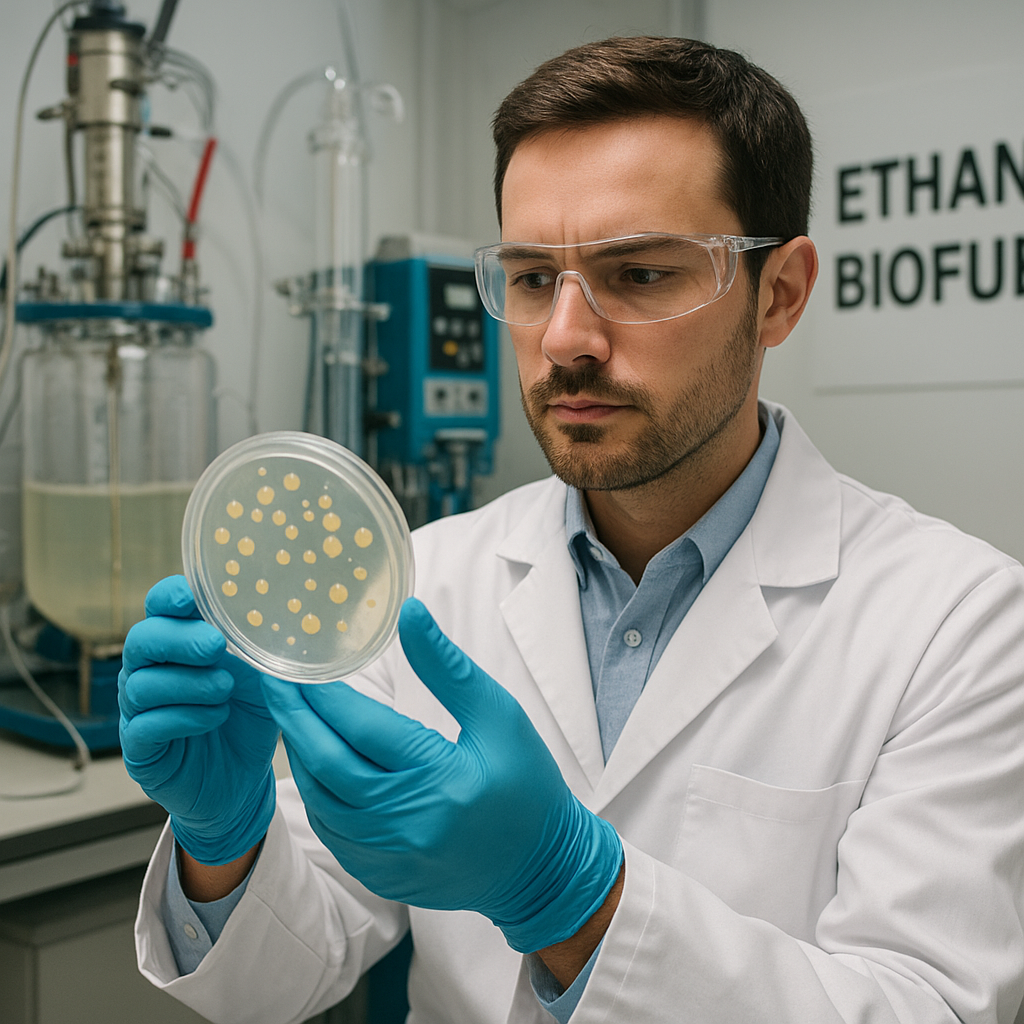
Researchers are enhancing ethanol biofuel production through genetic engineering, process optimization, and mathematical modeling, signaling promising developments in sustainable energy.
Ethanol, a biofuel derived from plant biomass such as corn, sugarcane, and switchgrass, has garnered significant scientific interest due to its potential to reduce greenhouse gas emissions and dependence on fossil fuels. This renewable energy source is produced primarily by fermenting plant material with microorganisms like yeast or bacteria, a process involving pretreatment, hydrolysis, fermentation, and distillation stages.
Recent research focuses on improving the efficiency and sustainability of ethanol production. Advances in genetic engineering have enabled the creation of microorganisms capable of fermenting a broader range of biomass feedstocks, with increased tolerance to temperature and toxic compounds, thereby enhancing ethanol yield. For example, a genetically engineered yeast strain has successfully converted sugarcane bagasse, an agricultural residue, into ethanol with high efficiency.
Ethanol’s favorable properties include its high octane rating and compatibility as a direct gasoline substitute in various blends (such as E10 and E85). Beyond fuel applications, ethanol serves as a solvent, disinfectant, and a precursor for synthesizing bio-based chemicals like ethylene, propylene, and butadiene, which are key components of plastics and fibers.
Mathematical modeling plays a crucial role in optimizing production processes. Models simulating microbial activity and reactor conditions help identify optimal parameters such as substrate concentration, temperature, and pH to maximize ethanol output cost-effectively. Such approaches promise enhancements in both productivity and sustainability.
As the global community seeks low-carbon energy solutions, ongoing research into ethanol biofuel production represents a vital step forward. These scientific advancements hold particular relevance for countries like the Philippines, where biofuel development aligns with national energy and environmental goals.
Sources referenced:
- https://www.manilatimes.net/cdn-cgi/content?id=OlhiJF.4_ngZ5A2HIpx4rPVpWeCda3Qch5Rq0ogRp2E-1791418863.646404-1.2.1.1-Pubvg3zvXfU3YMAbTEtv9G56n4lTd3PjrfhXcChkw2MXowBzLtM5X3mYogk1JpAq