
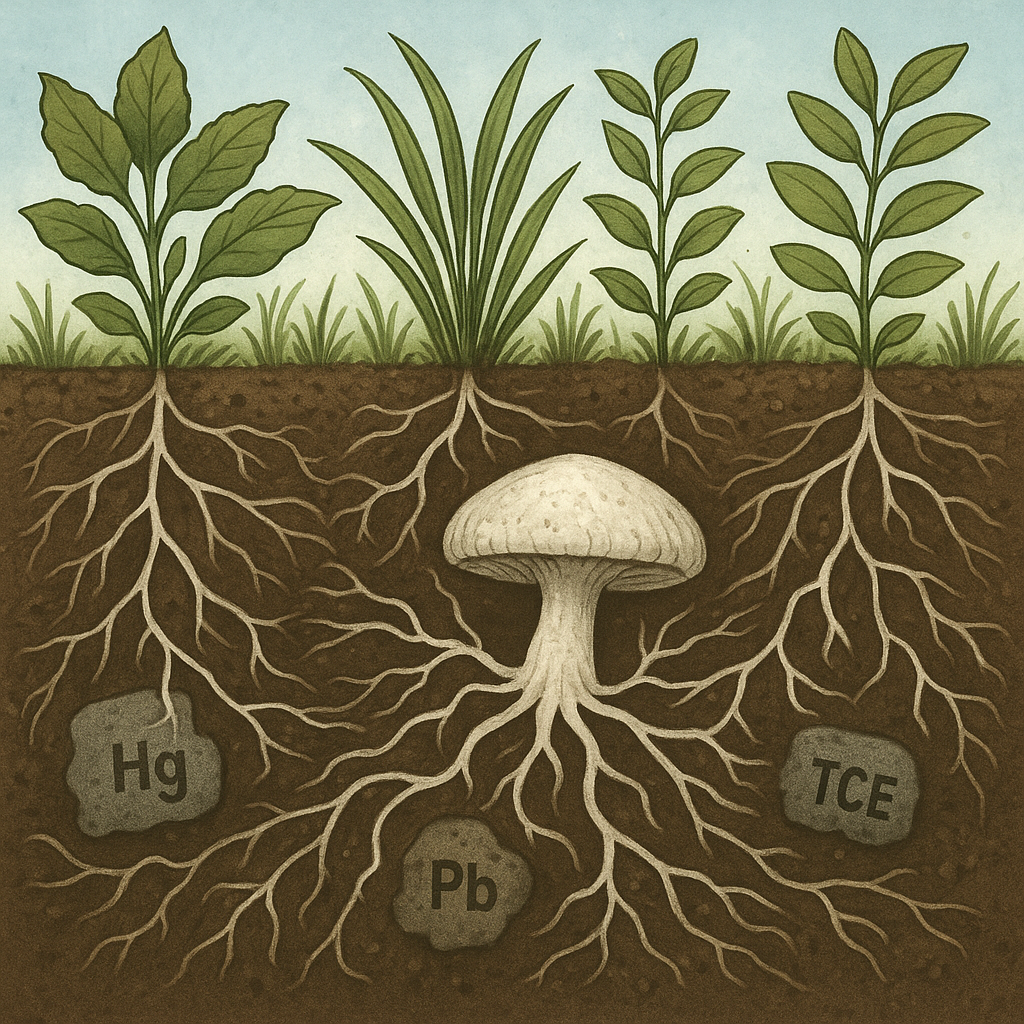
Scientists are employing mycoremediation—the use of fungi and their mycelium—to degrade toxic pollutants sustainably and cost-effectively, offering a promising frontier in environmental restoration.
Mycoremediation, an innovative environmental restoration technique, uses fungi to remediate polluted soil and water by breaking down toxic compounds into harmless substances. Certain fungi, such as oyster mushrooms (Pleurotus ostreatus) and turkey tail mushrooms (Trametes versicolor), produce enzymes like laccase and peroxidase that can degrade complex pollutants including polycyclic aromatic hydrocarbons, pesticides, and heavy metals. This biological approach is tailored by selecting fungal species suited to specific contaminants, enabling effective and targeted cleanup.
Compared to traditional chemical and excavation methods, mycoremediation offers sustainable, cost-efficient remediation that minimizes ecological disruption. Beyond pollutant degradation, fungi can form symbiotic mycorrhizal associations with plant roots, facilitating nutrient uptake and promoting ecosystem health.
As research reveals more about fungal roles in ecosystems and expands mycoremediation applications, this method shows great promise in combating pollution and aiding climate change adaptation. Its development opens new pathways toward environmentally friendly cleanup technologies, highlighting fungi’s key role in sustaining and restoring natural environments for future generations.
Sources referenced:
- https://www.manilatimes.net/cdn-cgi/content?id=Jny4ae6ijjeAe9ALw.zwnG4DeNNwzc.zaQbv8R3XFNk-1790565650.1404521-1.2.1.1-GFtfup_9w0CMUspLW0_nzhoYD9MfGIL9kX_82yhB2KVyhW5Udd5mkkXfo98NlFTH