
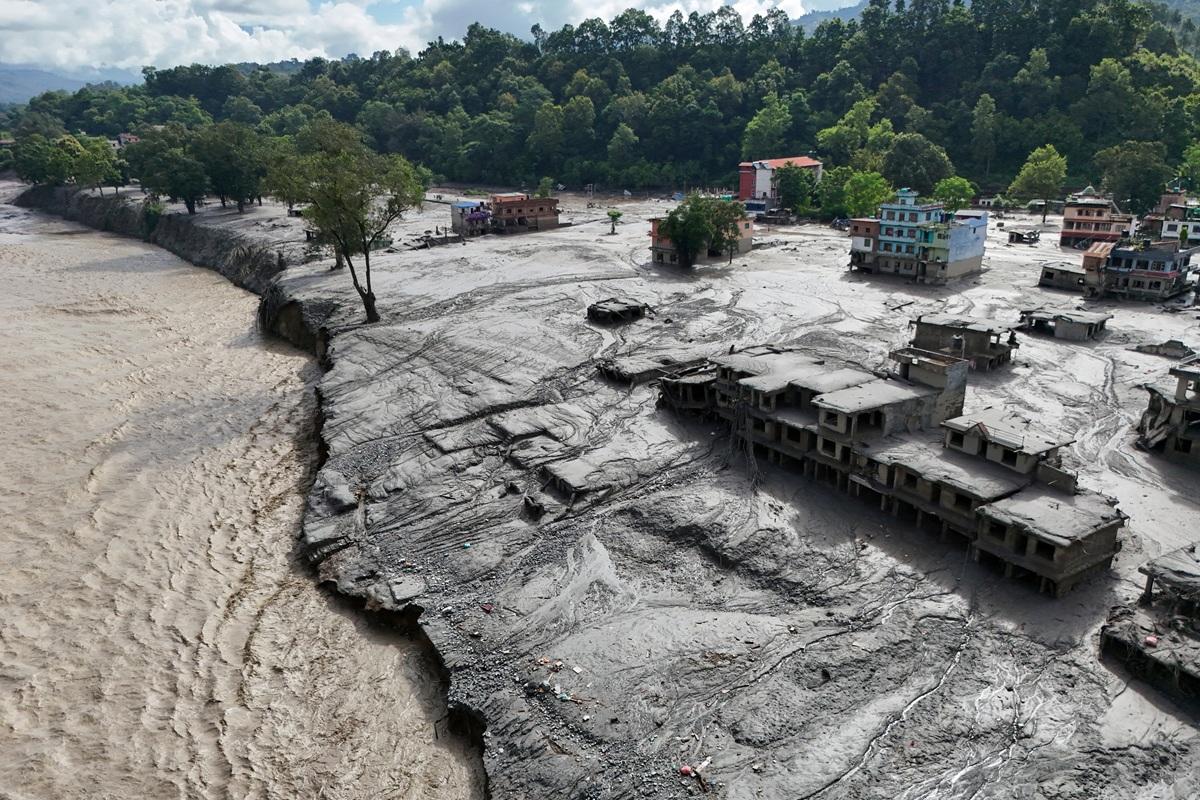
Research highlights how climate change-driven glacier retreat and permafrost thaw triggered the catastrophic mountain collapse, killing over 1,400 and leaving thousands missing.
Scientists from the World Weather Attribution group have confirmed that climate change was a fundamental factor in the devastating glacial mountain collapse along the China-Nepal border in August 2026. The disaster claimed more than 1,400 lives and left at least 6,600 individuals missing as a massive section of rock and glacier broke away from Langtang Lirung mountain, triggering floods of water, ice, and debris that destroyed nearby communities.
According to the WWA report, the event was a “compound crisis” resulting not from a single extreme weather event but from a combination of long-term warming trends, glacier retreat, thawing permafrost, and geological instability. The warming climate has increased the altitude of the freezing threshold in the high Himalayas, causing ice and permafrost deep within the bedrock to thaw for extended periods, weakening the integrity of mountain slopes.
Utrecht University mountain hydrologist Walter Immerzeel, a co-author of the study, explained the region is facing “fundamental, irreversible shifts” as permafrost degradation and glacier retreat undermine mountain stability. The report also notes that a magnitude 7.8 earthquake in 2015 likely weakened the slope further, though its precise contribution remains unclear.
Local temperature records highlight that July and August 2026 were the warmest months recorded in the area, with heavy snowfall in late 2025 increasing meltwater levels prior to the collapse. Nepal, a predominantly rural nation with relatively low greenhouse gas emissions, faces significant economic impacts; its government estimates reconstruction costs at approximately $4.78 billion.
Nepal’s disaster management authorities reported revisions in the death and missing counts, with 1,403 bodies recovered and 6,150 people still unaccounted for. China’s death toll stands at 43 with 519 missing. Prime Minister Balendra Shah is slated to address the United Nations General Assembly to emphasize the urgency of climate-related loss and damage. Experts, including Imperial College London’s Professor Friederike Otto, underline the necessity of discussing climate change’s role within the context of such disasters.
This tragedy underscores the urgent need for adaptation strategies in vulnerable mountainous regions worldwide as irreversible climate changes escalate risks to communities.
Sources referenced:
- https://www.gmanetwork.com/news/topstories/world/1002687/no-doubt-of-climate-change-role-in-deadly-china-nepal-flood-scientists/story/