
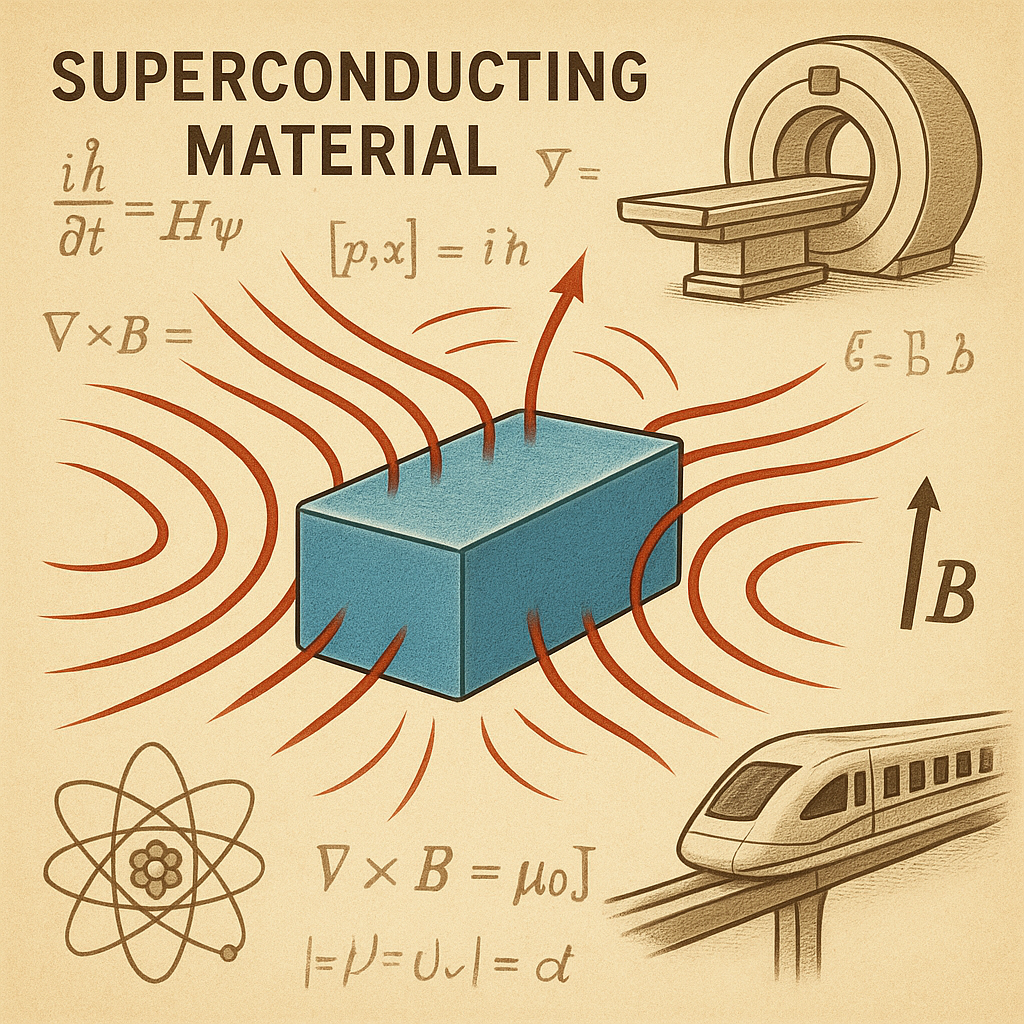
Superconductivity, a quantum phenomenon characterized by zero electrical resistance, continues to inspire groundbreaking research and applications from medical imaging to energy-efficient technologies, with ongoing efforts to discover room-temperature superconductors.
Superconductivity is a remarkable quantum phenomenon first discovered in 1911 by Dutch physicist Heike Kamerlingh Onnes, who observed mercury’s electrical resistance dropping abruptly to zero near absolute zero temperatures. This discovery revolutionized physics by revealing materials that carry electric current without energy loss. A key feature of superconductors is their ability to expel magnetic fields, known as the Meissner effect, which further differentiates them from ordinary conductors.
Materials science has played a crucial role in expanding the range of superconductors. Initially limited to a few elemental metals at extremely low temperatures, the field advanced with the discovery of high-temperature superconductors (HTS), such as Yttrium Barium Copper Oxide (YBCO) and Bismuth Strontium Calcium Copper Oxide (BSCCO). These complex ceramic materials superconduct at significantly higher temperatures, making real-world applications more feasible.
Today, superconductors are integral in several technologies. In medicine, they power the magnets in MRI machines enabling detailed and non-invasive imaging. In fundamental physics research, superconducting magnets steer particle beams in large accelerators. Energy utilities are exploring superconducting power lines for efficient electricity transmission with minimal losses. Moreover, innovative transport technologies like magnetic levitation trains utilize superconducting magnets to achieve frictionless, high-speed travel.
Challenges remain, such as the need for extremely low temperatures to maintain superconductivity, which entails sophisticated and costly cooling systems. The holy grail for researchers is room-temperature superconductors, which could revolutionize multiple industries further. Recent breakthroughs, including superconductivity under extreme pressure in hydrogen sulfide compounds and theoretical predictions of topological superconductors that could enable robust quantum computing, offer promising avenues.
Ongoing research into superconductivity not only deepens our understanding of quantum mechanics but also opens doors to revolutionary advancements in technology, including energy efficiency, medical diagnostics, high-speed transportation, and next-generation computation.
Sources referenced:
- https://www.manilatimes.net/cdn-cgi/content?id=WbZuJjDV_NyYGkNkDO5Z8zoigdfBvF59iP9pPUF700U-1788283256.9396467-1.2.1.1-GcpfewWN0pveo9RZ1XM.nq.KkSHW910Adp4Zv1Y6KOs5_MlP5c5fyb_ONZuyQe5V