
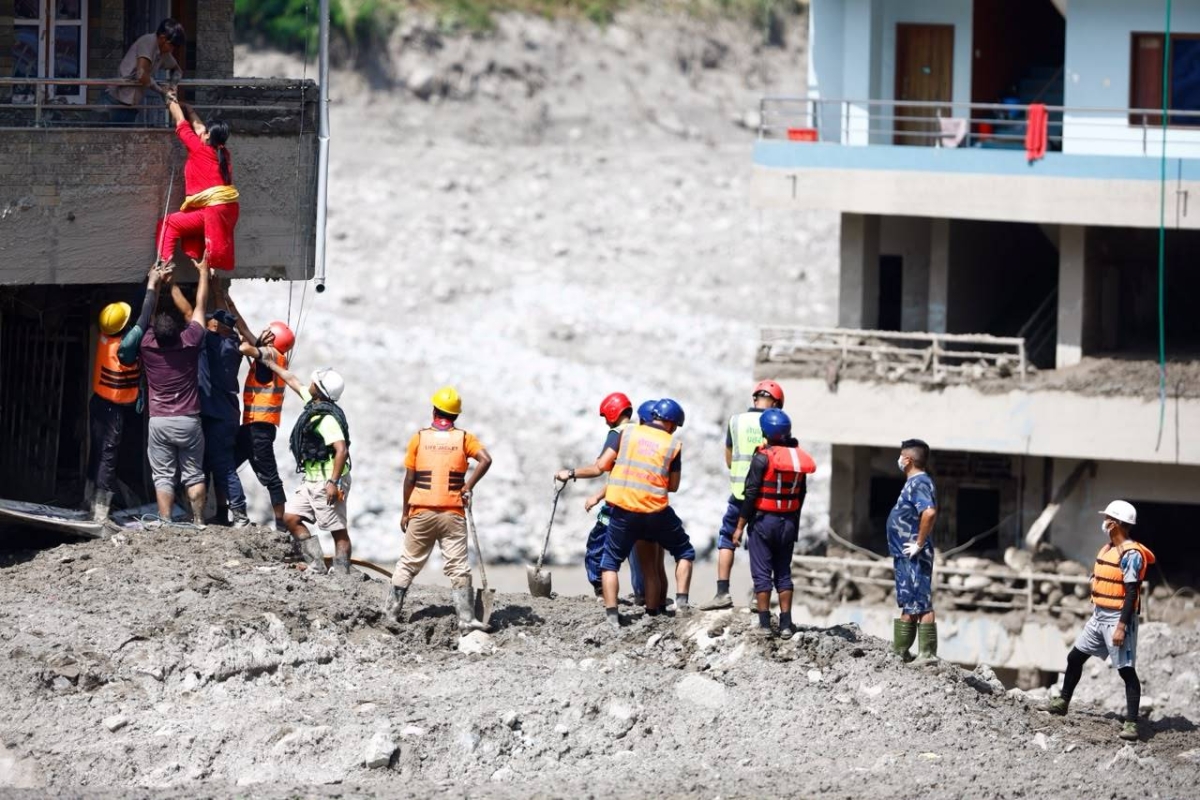
A catastrophic glacier burst in Nepal underscores the growing downstream risks across the Himalayan region, driven by climate change, upstream construction, and insufficient information sharing among neighboring countries.
A recent devastating event in Nepal, where a hanging glacier abruptly collapsed into a meltwater lake, triggering a massive flood surge, has brought to light the urgent need for regional cooperation and transparency in managing Himalayan environmental risks. The flood obliterated settlements, infrastructure, and took numerous lives downstream, demonstrating how complex climatic, geological, and human factors are converging to create unprecedented hazards. Experts emphasize that warming temperatures are accelerating the destabilization of glaciers and permafrost throughout the Himalayas, expanding and creating new glacial lakes behind fragile moraines prone to failure. Such hazards are no longer confined to Nepal but are emerging across neighboring regions including Ladakh, Uttarakhand, Himachal Pradesh, Sikkim, Bhutan, and Pakistan’s Karakoram. The incident reveals that upstream construction and lack of information sharing can magnify downstream vulnerabilities. This calls for enhanced collaborative measures among Himalayan nations to address climate change impacts, enforce early warning systems, and share vital data to mitigate future disasters that threaten millions living downstream. Nepal’s tragedy serves as a grim warning and a summons for coordinated regional risk management strategies in the Himalayan arc.
Sources referenced:
- https://thehimalayantimes.com/opinion/when-upstream-construction-and-secrecy-becomes-downstream-risk