
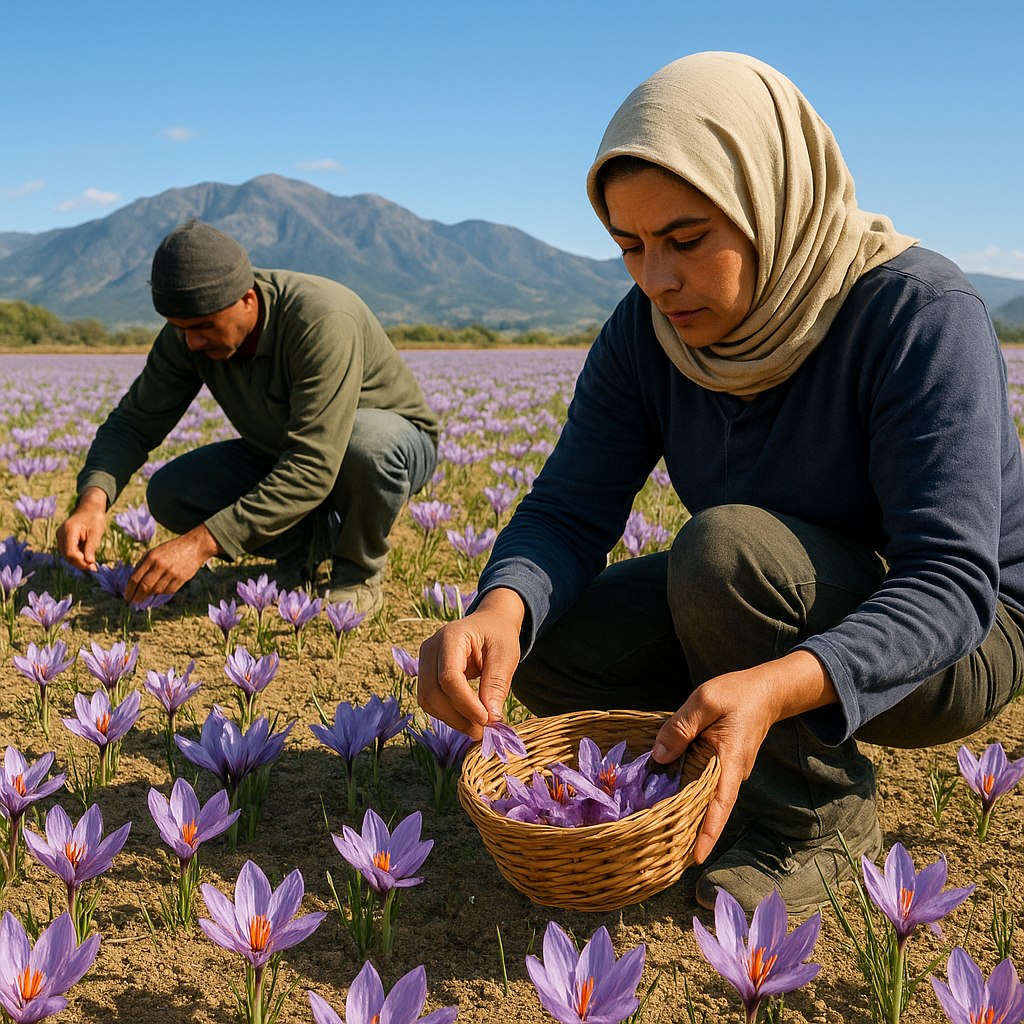
An in-depth exploration of Greece's vibrant saffron industry, highlighting the critical contributions of migrant laborers, including Nepalese workers.
Greece’s agricultural sector is renowned for producing a variety of distinctive products, among which saffron, often dubbed “red gold,” is a prized commodity. This article takes a closer look at the saffron harvest in Greece, focusing on the key role played by migrant workers, particularly from Nepal. These workers contribute significantly to the cultivation and collection of saffron, a labor-intensive crop that demands careful handling.
Official statements from the Greek agricultural ministry confirm the reliance on seasonal migrant labor to support this specialty crop’s productivity. Migrant workers receive contracts and work under regulated conditions, ensuring fair treatment and compliance with labor laws. However, some media reports have highlighted challenges faced by these workers in terms of wage delays and accommodation adequacy, issues that are under continuous review by relevant authorities.
The integration of migrant workers into Greece’s agricultural labor market underscores the importance of cross-border labor mobility for sustaining niche agricultural products. Research initiatives by local universities are underway to optimize conditions for migrant laborers, enhance sustainable farming practices, and improve overall industry standards.
This sector not only contributes to Greece’s economy but also provides essential employment opportunities for migrants, fostering economic development and multicultural collaboration within rural areas.
Sources referenced:
- https://wearesolomon.com/article/a-behind-the-scenes-look-at-greeces-red-gold-harvest